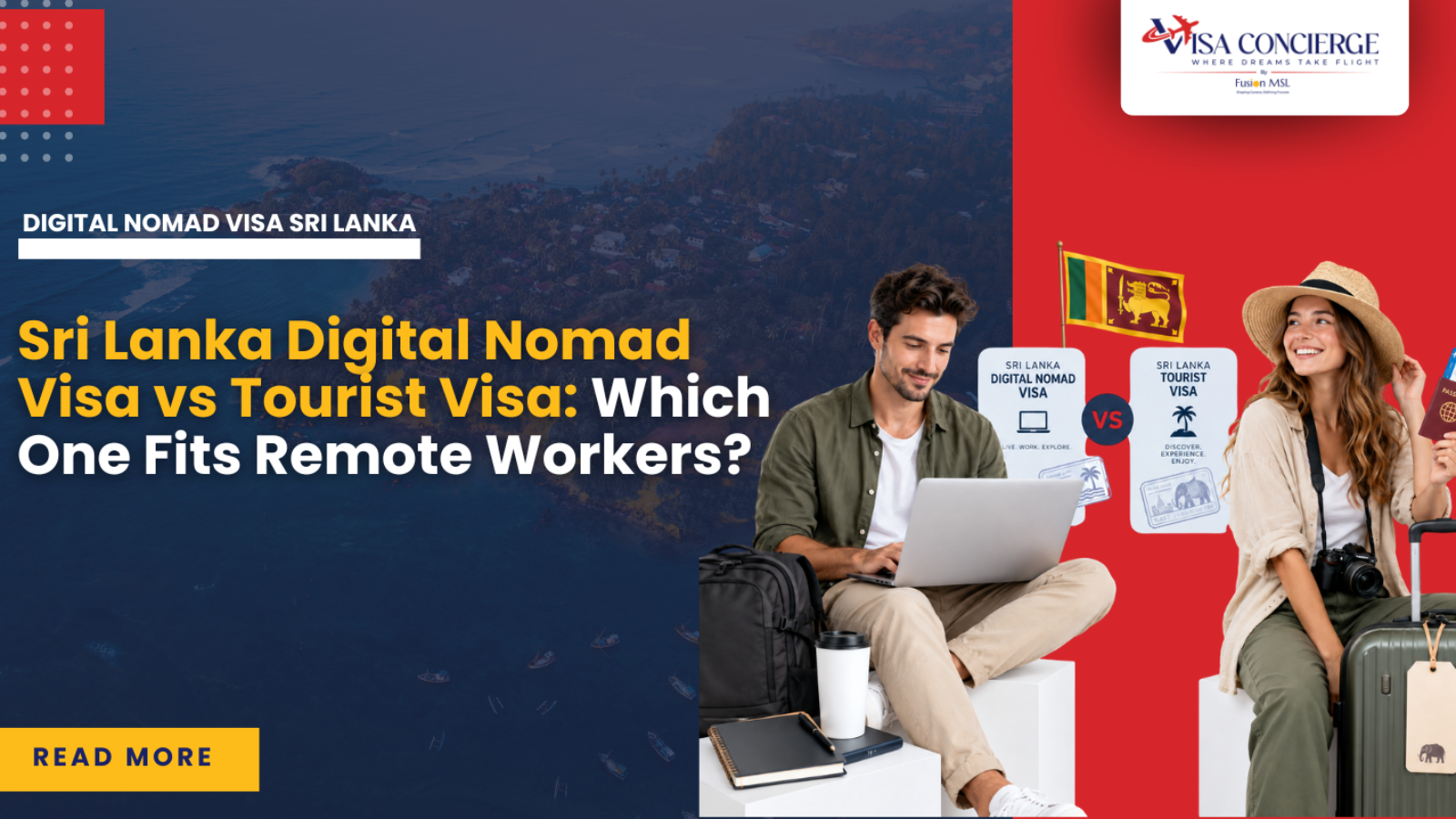
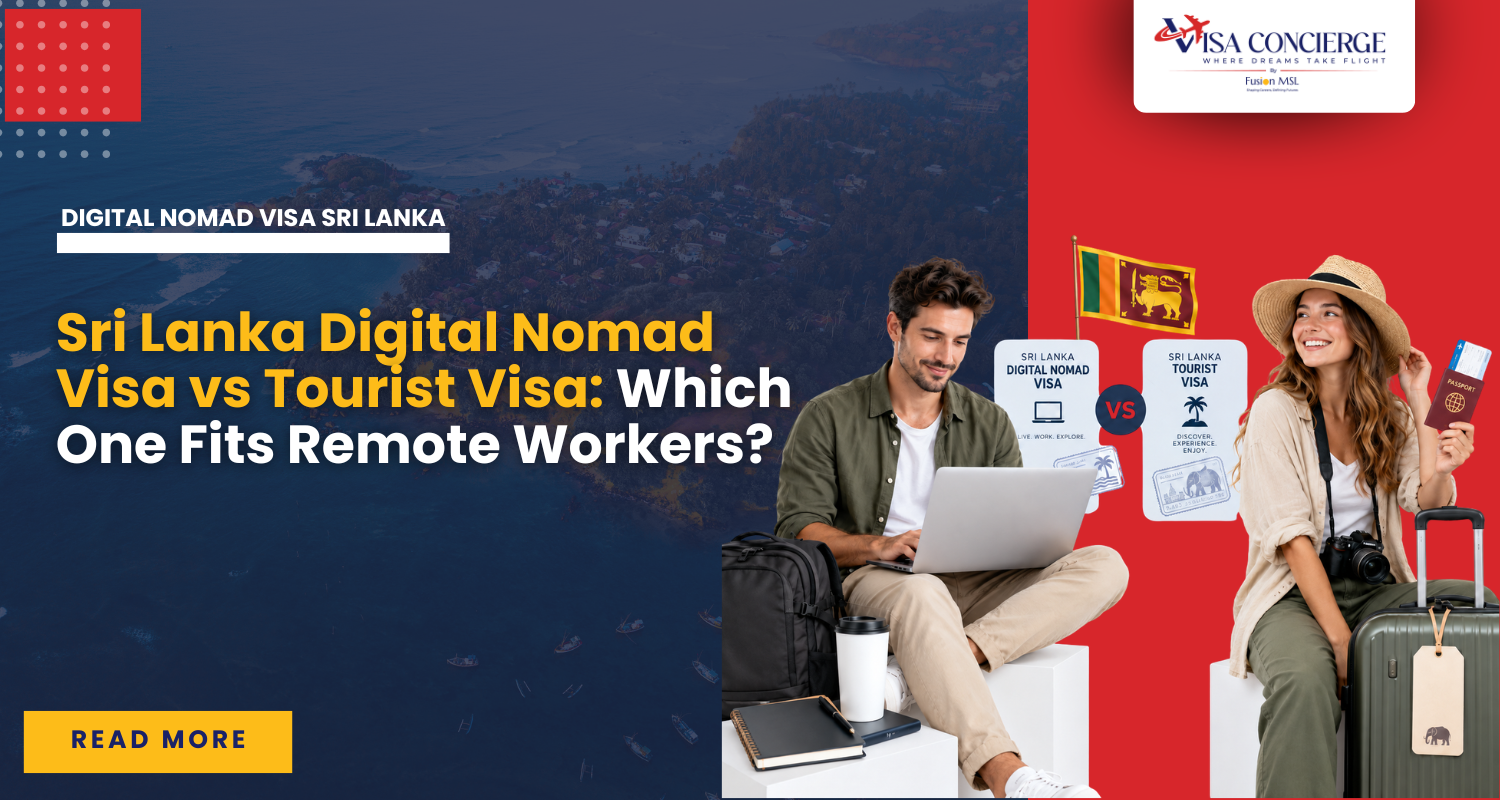
Sri Lanka Digital Nomad Visa vs Tourist Visa: Which One Fits Remote Workers?
Sri Lanka has become one of the most attractive destinations for remote workers, freelancers, entrepreneurs, and digital nomads.
The country offers what many global professionals are searching for: tropical beaches, coworking spaces, a lower cost of living compared to many Western cities, strong cultural experiences, wellness options, surf towns, tea country, and a growing remote work lifestyle.
But before you book your flight and set up your laptop by the beach, there is one important question to answer:
This is where many remote workers get confused. A tourist visa may be suitable for a holiday or a short visit. But if your real intention is to live in Sri Lanka while working remotely for overseas clients, employers, or your own foreign-registered business, the visa purpose needs to be checked carefully.
The Sri Lanka Digital Nomad Visa is designed for remote workers, but it also comes with specific eligibility expectations, including a monthly income remittance requirement.
This guide explains the key difference between a Sri Lanka Digital Nomad Visa and a Sri Lanka Tourist Visa in a simple, practical way. It is not a document checklist. Instead, it will help you understand which pathway may fit your purpose — and when to speak to Visa Concierge before you apply.
Why Remote Workers Are Looking at Sri Lanka
Sri Lanka is not just a holiday destination anymore. For many foreign professionals, it is becoming a serious remote work base.
Popular locations such as Colombo, Galle, Weligama, Ahangama, Hiriketiya, Kandy, Ella, and the southern coast are already attracting remote workers who want a lifestyle that blends work, travel, culture, and wellness.
For digital nomads, Sri Lanka offers:
- Beach and surf towns
- City access in Colombo
- Boutique villas and serviced apartments
- Cafés and coworking spaces
- Wellness, yoga, and Ayurveda experiences
- Access to nature, wildlife, and heritage sites
- A convenient base in South Asia
But enjoying Sri Lanka as a remote worker is not only about where you stay. It is also about whether your visa category matches your actual purpose.
That is why the comparison between the Sri Lanka Digital Nomad Visa and Tourist Visa matters.
What Is a Sri Lanka Tourist Visa?
A Sri Lanka Tourist Visa is generally meant for foreign nationals visiting Sri Lanka for short-term tourism-related purposes.
According to Sri Lanka Immigration, a Tourist Visa is issued to genuine tourists who enter Sri Lanka for purposes such as sightseeing, holidays, visiting friends and relatives, medical treatment including Ayurvedic and yoga-related treatment, sports events, competitions, and cultural performance-related activities.
In simple terms, a tourist visa is for visiting Sri Lanka — not for setting up a long-term remote work lifestyle.
A tourist visa may be suitable if you are:
- Visiting Sri Lanka for a holiday
- Exploring the country for a short period
- Visiting friends or relatives
- Coming for wellness or medical-related travel
- Attending permitted cultural or sports-related activities
- Testing Sri Lanka as a possible future destination before making a longer plan
However, if your real purpose is to live in Sri Lanka while continuing your remote work, you should be careful about assuming that a tourist visa is the best route.
What Is the Sri Lanka Digital Nomad Visa?
The Sri Lanka Digital Nomad Visa is designed for foreign professionals who want to live in Sri Lanka while working remotely for employers, clients, or businesses based outside Sri Lanka.
The official Digital Nomad Visa category describes the visa as being for foreign professionals who wish to live and work remotely from Sri Lanka while serving clients or companies based outside the country. It also identifies eligible applicants as foreign nationals aged 18 or above, with spouse and dependents of the main applicant also considered under the category.
One important eligibility point is the income requirement. The main applicant is required to show a minimum monthly income remittance of USD 2,000. If the dependent count increases beyond two, an additional USD 500 per month should be remitted for each additional dependent.
This pathway is different from a tourist visa because the purpose is not simply holiday travel. The purpose is remote work from Sri Lanka while income and work activity remain connected to overseas sources.
The Digital Nomad Visa may be suitable for:
- Remote employees working for overseas companies
- Freelancers serving international clients
- Online business owners with businesses registered outside Sri Lanka
- Consultants working remotely for overseas clients
- Digital entrepreneurs
- Remote workers planning a longer stay in Sri Lanka
- Families relocating temporarily under a remote work lifestyle
This makes the Digital Nomad Visa more purpose-aligned for foreign nationals who want Sri Lanka to be their remote work base.
Tourist Visa vs Digital Nomad Visa: The Main Difference
A tourist visa is for visiting Sri Lanka as a tourist.
A Digital Nomad Visa is for living in Sri Lanka while working remotely for foreign income sources.
This is an important distinction because Sri Lanka Immigration states that visit visa holders should not engage in any form of paid or unpaid employment, or in trade or business other than what is specified in the visa. It also states that visit visa holders should not live in Sri Lanka for a long period through frequent or successive visits.
For remote workers, this creates a practical question:
Are you coming mainly to travel, relax, and explore Sri Lanka for a short period?
Or are you planning to base yourself in Sri Lanka while continuing your professional work online?
If the second answer sounds closer to your situation, you should consider whether the Digital Nomad Visa is the more suitable pathway.
Can You Work Remotely on a Sri Lanka Tourist Visa?
This is one of the most common questions asked by digital nomads.
A tourist visa is meant for tourism-related purposes. It is not designed as a long-stay remote work visa. Sri Lanka Immigration’s general visit visa conditions restrict paid or unpaid employment and business or trade activities outside the visa conditions.
Remote work can sometimes feel different because the employer or client is outside Sri Lanka. But from a visa planning perspective, the question is not only “Where is the income coming from?” It is also “What is the purpose of your stay?”
If your real purpose is to live in Sri Lanka while working online, then the Digital Nomad Visa may be a more appropriate category to assess.
At Visa Concierge, we help remote workers understand the difference between visiting Sri Lanka as a tourist and staying in Sri Lanka as a remote professional.
Who Should Consider the Sri Lanka Digital Nomad Visa?
You should consider getting guidance on the Sri Lanka Digital Nomad Visa if:
- You want to stay in Sri Lanka longer than a short holiday
- You will continue working online while in Sri Lanka
- Your clients, employer, or business are based outside Sri Lanka
- You can meet the minimum monthly income requirement
- You want a visa pathway that better matches remote work
- You plan to live in Sri Lanka with your spouse or dependents
- You are a freelancer, consultant, founder, or online professional
- You are already in Sri Lanka and unsure whether your current visa fits your purpose
- You want to avoid confusion between tourist travel and remote work
The official Digital Nomad Visa category refers to remote employment, freelancing, or owning a business not registered in Sri Lanka that serves clients outside Sri Lanka. It also refers to the minimum monthly income remittance requirement for the main applicant.
Because the category is purpose-specific and includes an income/remittance requirement, applicants should avoid relying on general advice from social media, travel groups, or outdated blog posts.
Who May Still Use a Tourist Visa?
A tourist visa may still be suitable for foreign nationals who are genuinely visiting Sri Lanka for tourism or short-term travel purposes.
For example, a tourist visa may fit if you are:
- Coming for a holiday
- Visiting beaches, cultural sites, wildlife parks, or wellness retreats
- Visiting friends or family
- Exploring Sri Lanka before deciding whether to relocate later
- Attending permitted short-term tourism-related activities
- Travelling without the intention of staying long-term as a remote worker
If your visit is tourism-focused, a tourist visa may be enough. If your visit is remote work-focused, the Digital Nomad Visa should be reviewed.
Why Visa Purpose Matters
Visa purpose is not just a formality.
It affects how your stay is understood, what conditions apply, how long you may remain, whether renewal or extension is suitable, and whether your future plans are aligned with immigration expectations.
Choosing the wrong visa pathway can create issues such as:
- Confusion during arrival or extension
- Questions about your true purpose of stay
- Difficulty planning a longer stay
- Issues when dependents are involved
- Problems when moving from short-term travel to long-term residence
- Compliance concerns if your activities do not match your visa category
Sri Lanka Immigration also notes that residence visa holders should not engage in any form of activity other than the condition of their visa.
This is why remote workers should not treat visa selection as a quick travel form. The visa pathway should support your actual lifestyle plan in Sri Lanka.
What If You Are Already in Sri Lanka?
Many remote workers first arrive in Sri Lanka as tourists. After a few weeks, they realise they want to stay longer.
This is common.
You may have arrived for a holiday, discovered a lifestyle that works for you, started staying in a surf town or coworking community, and then decided that Sri Lanka could become your remote work base.
If that happens, the next step should not be guesswork.
You should review:
- Your current visa status
- Your purpose of stay
- Whether your work is remote and foreign-sourced
- Whether you meet the Digital Nomad Visa income requirement
- Whether you plan to include dependents
- Whether you need a longer-term visa pathway
- Whether a Digital Nomad Visa or another residence category is more suitable
At Visa Concierge, we assist foreign nationals who are already in Sri Lanka and want to understand their next visa steps before their current stay becomes complicated.
Digital Nomad Visa for Families
The Digital Nomad Visa is not only for solo travellers.
Many remote professionals want to move with a spouse, partner, or children. Some want to spend a year in Sri Lanka as a family. Others want to combine remote work with international schooling, slow travel, wellness, or a lifestyle break.
The official Digital Nomad Visa category includes spouse and dependents of the main applicant under eligible persons. It also states that if the dependent count increases beyond two, an additional USD 500 per month should be remitted for each additional dependent.
That said, family cases should be planned carefully. Dependents can affect financial planning, stay arrangements, schooling decisions, insurance considerations, and the overall visa pathway.
This is where personalised guidance becomes important. A solo freelancer’s process may not look the same as a family relocating with children.
Tourist Visa, Business Visa, or Digital Nomad Visa?
Some applicants are confused because they are not only working remotely — they may also have meetings, partnerships, or business interests in Sri Lanka.
This is where professional visa guidance becomes very important.
A Business Purpose Visa is generally for short-term business visits such as meetings, negotiations, seminars, conferences, workshops, short-term training, religious events, symposiums, and certain event participation. However, the official visa conditions state that visit visa holders should not engage in paid or unpaid employment or other activities outside the specified visa purpose.
So the question is not simply:
“Am I working?”
It is:
“What exactly will I be doing in Sri Lanka?”
“Who is the work connected to?”
“Is my income foreign-sourced?”
“Am I meeting clients locally?”
“Am I setting up or running a business in Sri Lanka?”
“Am I staying short-term or long-term?”
Depending on the answers, the suitable pathway may differ.
Visa Concierge can help you understand whether your case is closer to a tourist visit, business visit, digital nomad stay, investor pathway, employment route, or another residence visa category.
Why Remote Workers Should Not Depend Only on Online Advice
Digital nomad forums and travel groups can be helpful for lifestyle tips. They are good for finding cafés, coworking spaces, apartment recommendations, and city comparisons.
But visa advice is different.
A comment from another traveller may not apply to your nationality, income source, family situation, current visa status, or intended stay period. Immigration rules, procedures, forms, and interpretations can also change over time.
Online advice can give you a general idea, but it cannot assess whether your personal situation is suitable for the Digital Nomad Visa, Tourist Visa, Business Visa, or another residence pathway.
That is why a short consultation before applying can save time, avoid confusion, and help you move forward with a clearer plan.
How Visa Concierge Helps Digital Nomads and Remote Workers
At Visa Concierge, we support foreign nationals, remote workers, freelancers, entrepreneurs, and families who want to understand the correct Sri Lanka visa pathway.
Our support may include:
- Identifying whether your purpose fits a tourist, business, digital nomad, or residence pathway
- Reviewing your remote work and income situation in a practical way
- Helping you understand the monthly income/remittance requirement
- Explaining the process without overwhelming you
- Supporting applicants already in Sri Lanka
- Guiding families and dependents
- Helping you avoid wrong-category applications
- Coordinating the visa process with the relevant authorities
- Supporting future renewal or long-stay planning
We do not simply ask, “Which visa do you want?”
When Should You Contact Visa Concierge?
You should speak to Visa Concierge if:
- You are planning to work remotely from Sri Lanka
- You are unsure whether a tourist visa is enough
- You are already in Sri Lanka and want to stay longer
- You are a freelancer or consultant serving overseas clients
- You work for a foreign employer and want to live temporarily in Sri Lanka
- You own an overseas business and want to operate remotely from Sri Lanka
- You want to understand whether you meet the income requirement
- You want to bring your spouse or dependents
- You are confused between tourist, business, digital nomad, investor, or residence visa options
- You want to understand your visa pathway before making travel or accommodation commitments
Quick Comparison: Sri Lanka Tourist Visa vs Digital Nomad Visa
Tourist Visa
A Sri Lanka Tourist Visa is generally suitable for short-term travel, holidays, sightseeing, visiting friends or relatives, medical or wellness travel, and permitted sports or cultural activities.
It is not designed for long-term residence or employment-related activity.
Digital Nomad Visa
A Sri Lanka Digital Nomad Visa is designed for eligible foreign nationals who want to live in Sri Lanka while working remotely for overseas employers, clients, or foreign-registered businesses.
It is more suitable for remote workers who want their visa purpose to reflect their actual lifestyle in Sri Lanka.
The main applicant is required to meet the minimum monthly income remittance requirement of USD 2,000, with additional remittance requirements applying if there are more than two dependents.
Final Thoughts
Sri Lanka is a beautiful place to visit — and for many remote workers, it can also become a meaningful temporary home.
But the visa you choose should match the way you actually plan to stay.
If you are coming only for a holiday, a tourist visa may be suitable. If you are planning to live in Sri Lanka while working remotely for overseas clients, employers, or your own foreign business, the Digital Nomad Visa may be the better pathway to explore.
The monthly income/remittance requirement is also an important point to consider before applying. A strong application starts with understanding your purpose, your work arrangement, your income position, your stay plan, and your visa options.
Planning to work remotely from Sri Lanka?
Speak to Visa Concierge for clear, professional guidance before you apply.
Call or WhatsApp: +94 77 962 9672
Website: www.visaconcierge.lk
Visa Concierge by Fusion MSL
Your Journey, Our Priority.
Frequently Asked Questions
1. What is the main difference between the Sri Lanka Digital Nomad Visa and Tourist Visa?
The main difference is purpose. A Tourist Visa is generally for short-term tourism-related travel. A Digital Nomad Visa is designed for eligible remote workers who want to live in Sri Lanka while working for overseas employers, clients, or businesses.
2. Can I work remotely from Sri Lanka on a tourist visa?
You should not assume that a tourist visa is suitable for remote work. A tourist visa is for tourism-related purposes, while remote work from Sri Lanka may need to be assessed under the Digital Nomad Visa or another suitable pathway.
3. What is the monthly income requirement for the Sri Lanka Digital Nomad Visa?
The official Digital Nomad Visa category requires the main applicant to show a minimum monthly income remittance of USD 2,000. If the dependent count increases beyond two, an additional USD 500 per month should be remitted for each additional dependent. Because income, remittance, and dependent situations can vary from applicant to applicant, it is better to get your profile reviewed before applying.
4. Who is the Sri Lanka Digital Nomad Visa for?
It is generally for foreign nationals who are 18 or above and engaged in remote employment, freelancing, or an overseas business that serves clients outside Sri Lanka, subject to meeting the applicable requirements.
5. Can I apply for the Digital Nomad Visa with my family?
The official Digital Nomad Visa category includes spouse and dependents of the main applicant under eligible persons. However, family cases should be reviewed carefully before applying.
6. Is a Business Visa the same as a Digital Nomad Visa?
No. A Business Visa is generally for short-term business visits such as meetings, negotiations, conferences, workshops, or training. A Digital Nomad Visa is for remote workers who want to live in Sri Lanka while working for foreign income sources.
7. What if I am already in Sri Lanka on a tourist visa?
If you are already in Sri Lanka and want to stay longer while working remotely, you should get your situation reviewed before assuming your current visa is suitable. Visa Concierge can help you understand the available options based on your purpose of stay.
8. Does Visa Concierge provide a public document checklist?
We recommend case-specific guidance instead of relying on a generic checklist. Requirements can vary depending on nationality, family situation, visa purpose, current status, income/remittance position, and the latest authority process.
9. Can Visa Concierge help digital nomads choose the right visa route?
Yes. Visa Concierge can help remote workers, freelancers, entrepreneurs, families, and foreign professionals understand whether their case fits a Tourist Visa, Business Visa, Digital Nomad Visa, or another Sri Lanka residence visa pathway.