Sri Lanka Work & Employment Visa Guide for Foreign Nationals

Sri Lanka Work Visa Guide | Employment Residence Visa for Foreigners

Introduction

Planning to work in Sri Lanka as a foreign national?

Whether you are joining a private company, working on a government-approved project, joining a BOI-approved business, working for a bank, or relocating as an expatriate employee, you need to make sure your visa category matches your purpose of stay.

Many foreign nationals assume that a tourist visa or business visit visa is enough if they are only coming for a short assignment or company-related work. However, if your purpose involves employment, professional work, or working for a company or project in Sri Lanka, you may need to consider the correct Sri Lanka Employment Residence Visa pathway.

This guide explains the Sri Lanka work visa process, who may need it, the employment residence visa categories, common document requirements, validity, renewal, and mistakes to avoid.

What Is a Sri Lanka Work Visa?

In Sri Lanka, foreign nationals who are coming for employment-related purposes generally fall under the Residence Visa – Employment Category.

A residence visa is a permit for a non-Sri Lankan foreign national to obtain residence facilities in Sri Lanka for a special approved purpose. The Department of Immigration and Emigration lists Employment as one of the sub-categories under residence visas.

This means a work-related visa is not simply a short-stay visit visa. It is connected to the foreign national’s approved purpose of residence, employer, project, institution, or recommending authority.

Who May Need a Sri Lanka Employment Visa?

A Sri Lanka employment visa may be relevant for foreign nationals who are coming to Sri Lanka for:

  • Employment with a registered private company or institution
  • Work in a BOI-approved project
  • Work in a government-approved project
  • Employment in a bank
  • Employment in Colombo Port City
  • Professional or expatriate assignments
  • Corporate relocation to Sri Lanka
  • Project-based work with an approved organisation
  • Dependent residence linked to the main employee, where applicable

Sri Lanka Immigration lists the Employment Category to include professional personnel required for government-approved projects, expatriate personnel in BOI projects, personnel employed at banks, personnel employed in registered private companies or institutions, and personnel employed in Colombo Port City.

Work Visa vs Business Visit Visa: What Is the Difference?

A Business Visit Visa is generally for short-term business purposes such as business meetings, negotiations, seminars, conferences, workshops, or short-term training.

A Work or Employment Residence Visa is different. It is for foreign nationals who are coming to Sri Lanka to work, take up employment, or perform an approved role connected to an employer, project, or institution.

This distinction matters because Sri Lanka Immigration states that visit visa holders should not engage in any form of paid or unpaid employment, or in trade or business activities other than what is specified in the visa.

If you are attending a meeting, a business visit visa may be suitable. But if you are working for a Sri Lankan company, project, bank, BOI-approved entity, or approved employment arrangement, you should check the employment residence visa route.

Main Employment Visa Routes in Sri Lanka

The correct employment visa route depends on the employer type, project type, and recommending authority.

1. BOI-Approved Company or Project

Foreign nationals employed in projects under the Board of Investment of Sri Lanka may fall under the BOI employment category.

This may apply to:

  • Expatriate staff
  • Senior managers
  • Technical experts
  • Project specialists
  • Foreign professionals attached to BOI-approved businesses
  • Dependents of eligible employees, where applicable

According to Sri Lanka Immigration, BOI-related employment residence visa documents may include BOI certificate, request letter from the company or institution, BOI agreement, company registration certificate, details of board directors, articles of association, recommendation from BOI, passport bio-data page copy, health protection plan, and passport.

2. Government-Approved Projects

Foreign professionals whose services are required for government-approved projects may also fall under the Employment Category.

This is often relevant for:

  • Infrastructure projects
  • Consultancy assignments
  • Technical advisory roles
  • Development projects
  • Project-based foreign specialists

For project-related applications, Sri Lanka Immigration lists documents such as project office request, recommendation of the line ministry or Department of External Resources, project agreement, passport bio-data page copy, and passport.

3. Private Sector Company Employment

Foreign nationals employed by registered private companies or registered private institutions may need an employment residence visa under the private sector route.

This may apply to:

  • Foreign executives
  • Consultants
  • Technical staff
  • Managers
  • Specialists
  • Professionals employed by Sri Lankan registered companies

For private sector employment, Sri Lanka Immigration lists documents such as request letter from the representing company or institute, company registration certificate, details of the board of directors, articles of association, recommendation from the line ministry, passport bio-data page copy, health protection plan, and passport.

4. Bank Employment

Foreign nationals employed at banks may also fall under a specific employment residence visa route.

Sri Lanka Immigration lists bank-related documents such as bank request, recommendation of the Central Bank of Sri Lanka, passport bio-data page copy, health protection plan, and passport.

5. Colombo Port City Employment

Sri Lanka Immigration also lists personnel employed in Colombo Port City under the Employment Category.

This may be relevant for foreign professionals, investors, senior executives, and specialists working with approved Port City-related companies or projects.

Can Dependents Apply With the Main Employee?

In some employment residence visa categories, dependents may be eligible to apply with or under the main applicant.

Sri Lanka Immigration specifically mentions dependents in several employment-related contexts, including expatriate personnel employed in BOI projects, bank employees, and other employment-linked routes.

Dependent documents usually need to clearly prove the family relationship. This may include marriage certificates, birth certificates, passport copies, and any additional documents requested according to the category.

Common Documentation Considerations for a Sri Lanka Employment Visa

The documents required for a Sri Lanka Employment Residence Visa can vary depending on the employer type, the applicant’s role, the recommending authority, and the current requirements of the relevant government bodies.

For example, the document process may differ for BOI-approved companies, private companies, government-approved projects, banks, Port City-related entities, and dependent applications.

In general, applicants and employers may be required to provide supporting documents that confirm:

  • The purpose of employment in Sri Lanka
  • The employer or sponsoring organisation
  • The applicant’s role or assignment
  • The relevant authority recommendation, where applicable
  • The applicant’s passport and personal details
  • The relationship of dependents, if included
  • Any additional information requested by the relevant authorities

Because employment visa requirements can change from time to time, it is important not to rely on a generic checklist.

At Visa Concierge, we guide both the employer and the applicant through the required document preparation process, coordinate the application requirements, and assist in handling the necessary visa-related steps with the relevant authorities.

This helps reduce confusion, avoid unnecessary document gaps, and ensure the application is prepared according to the correct visa category and current requirements.

How Long Is a Sri Lanka Employment Residence Visa Valid?

According to Sri Lanka Immigration, a residence visa is generally valid for one year or for the period recommended by the relevant authority, and it can be renewed annually.

This means the validity period may depend on:

  • Employment contract duration
  • Project duration
  • Recommendation letter
  • Employer status
  • Authority approval
  • Passport validity
  • Immigration conditions

Applicants should also note that renewal conditions apply. Sri Lanka Immigration states that the intended stay in Sri Lanka should end at least two months before the expiry date of the travel document.

Can You Work in Sri Lanka on a Tourist Visa?

No. A tourist visa is not suitable for employment in Sri Lanka.

Sri Lanka Immigration states that visit visa holders should not engage in any form of paid or unpaid employment, or in trade or business activities other than what is specified in the visa.

If your purpose is employment, you should check the correct employment residence visa category before starting work.

Can You Work in Sri Lanka on a Business Visit Visa?

A business visit visa may be suitable for limited short-term business activities, but it is not the same as permission to take up employment.

If you are attending a meeting, negotiation, conference, seminar, or short-term training, a business visit visa may be relevant. However, if you are working for a company, project, institution, or employer in Sri Lanka, you should assess the Employment Residence Visa category.

Step-by-Step Process for Sri Lanka Employment Visa Planning

The Sri Lanka Employment Visa process generally involves the following key stages:

Step 1: Visa Category Assessment

Confirm whether the applicant’s purpose of stay falls under the correct employment-related residence visa category.

Step 2: Employer and Applicant Profile Review

Review the employer type, applicant role, assignment purpose, and intended stay period.

Step 3: Document Requirement Confirmation

Identify the required documents based on the specific employment visa route and current authority requirements.

Step 4: Document Preparation and Review

Prepare, organise, and review the required supporting documents before submission.

Step 5: Authority Coordination

Coordinate with the relevant authorities or recommending bodies where applicable.

Step 6: Application Submission Support

Assist with the application preparation and submission process.

Step 7: Application Follow-Up

Track the progress of the application and support any additional document or clarification requests.

Step 8: Visa Issuance and Renewal Guidance

Guide the applicant and employer on visa issuance, validity, conditions, and future renewal planning.

Common Mistakes to Avoid

Foreign employees and companies should avoid these common mistakes:

  • Entering Sri Lanka on a tourist visa and starting work
  • Treating a business visit visa as work permission
  • Not obtaining the correct recommendation letter
  • Submitting incomplete company documents
  • Not matching the job role with the visa purpose
  • Forgetting dependent documentation
  • Not checking passport validity before renewal
  • Starting the process too close to the intended travel or work start date
  • Assuming the same checklist applies to BOI, private company, bank, and project cases
  • Not planning renewals early

A work visa application should clearly connect the applicant, employer, purpose, supporting documents, and recommending authority.

Why Employers Should Plan the Visa Process Early

For companies hiring foreign nationals, employment visa planning should not be treated as a last-minute administrative task.

Early planning helps employers:

  • Confirm whether the role fits an employment visa category
  • Prepare internal company documents
  • Obtain recommendation letters
  • Plan dependent applications
  • Avoid onboarding delays
  • Reduce compliance risks
  • Support a smoother relocation experience for the employee

This is especially important for companies hiring expatriate professionals, technical experts, senior executives, consultants, or project-based employees.

How Visa Concierge Can Help

At Visa Concierge, we assist foreign nationals, employers, investors, corporate teams, and expatriate professionals with Sri Lanka visa guidance and documentation support.

Our services include:

  • Employment visa category assessment
  • Employer document checklist preparation
  • Applicant document guidance
  • BOI, project, private company, and bank employment visa support
  • Dependent visa guidance
  • Application form guidance
  • Document review
  • Immigration coordination support
  • Renewal and extension guidance
  • Compliance-focused advisory for employers and foreign employees

We help ensure that the visa category, documents, and purpose of stay are aligned before the application is submitted.

Frequently Asked Questions

1. What visa do I need to work in Sri Lanka?

Foreign nationals coming to Sri Lanka for employment usually need to check the Employment Category under Sri Lanka’s Residence Visa framework.

2. Can I work in Sri Lanka on a tourist visa?

No. A tourist visa is not suitable for employment. Visit visa holders should not engage in paid or unpaid employment or other activities outside the conditions of the visa.

3. Can my employer sponsor or support my Sri Lanka work visa?

Employment visa applications usually require employer-side documents and, depending on the route, recommendations from BOI, line ministry, Central Bank, or another relevant authority.

4. How long is a Sri Lanka employment residence visa valid?

A residence visa is generally valid for one year or the period recommended by the relevant authority and may be renewed annually.

5. Can dependents apply with the main employee?

Dependents may be eligible under certain employment-linked categories, depending on the main applicant’s route and supporting documents.

6. What documents does a private company need for a foreign employee?

For private sector company employment, Sri Lanka Immigration lists documents such as the company request letter, company registration certificate, board director details, articles of association, line ministry recommendation, passport bio-data page copy, health protection plan, and passport.

7. Do BOI company employees have a different document requirement?

Yes. BOI-related employment visa applications may require BOI certificate, BOI agreement, company documents, BOI recommendation, applicant passport copy, health protection plan, and passport.

8. Can Visa Concierge help companies with foreign employee visa applications?

Yes. Visa Concierge can assist corporate clients with employment visa category guidance, document preparation, application support, dependent guidance, and renewal coordination.

Final Thoughts

Sri Lanka’s employment visa process depends on the foreign national’s purpose of stay, employer type, and required authority recommendations.

If you are coming to Sri Lanka to work, or if your company is hiring a foreign employee, it is important to choose the correct visa category before the employee travels or starts work.

A properly prepared application can help avoid delays, document issues, and compliance concerns.

Need help with a Sri Lanka work or employment visa?


Contact Visa Concierge for professional guidance before you apply.

Call / WhatsApp: +94 77 962 9672 

Website: www.visaconcierge.lk

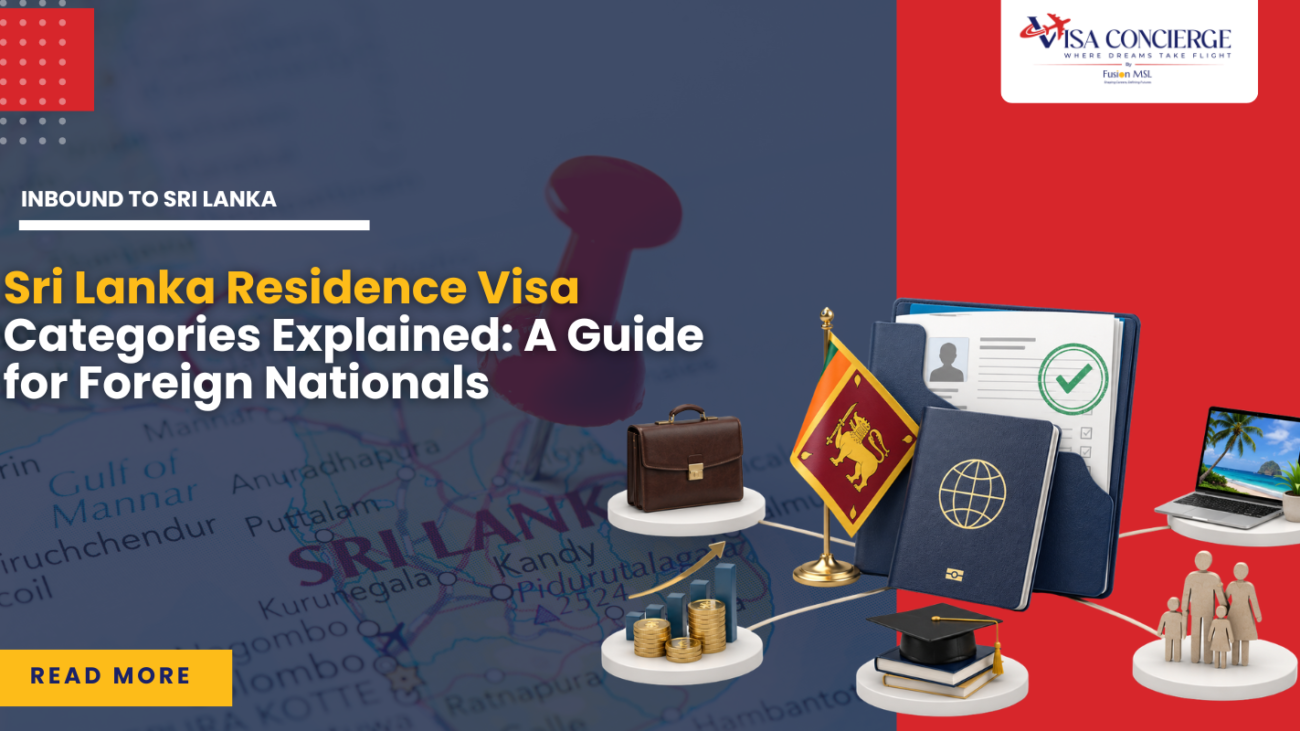
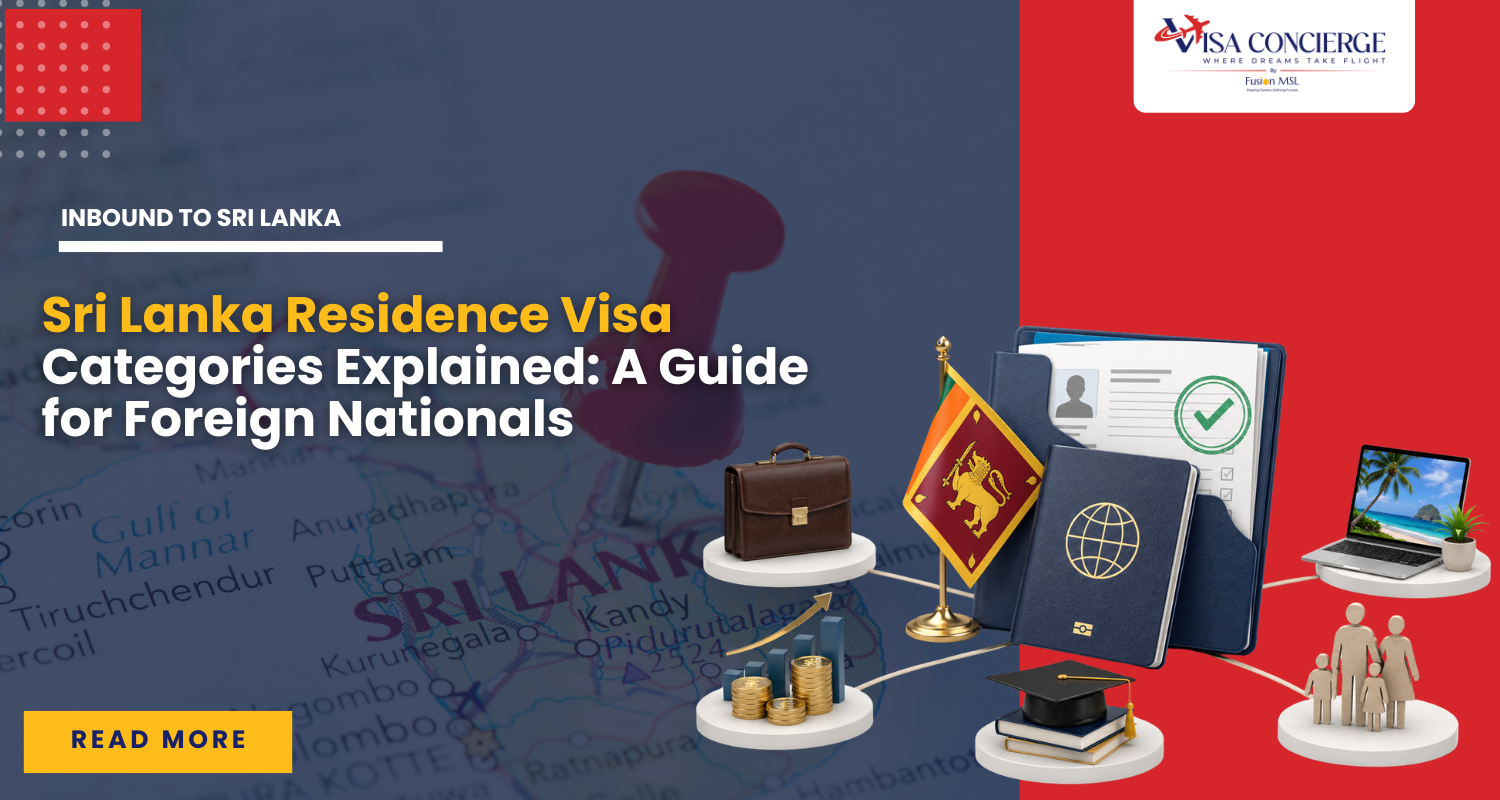
Sri Lanka Residence Visa Categories Explained: A Guide for Foreign Nationals

Sri Lanka Residence Visa Categories Explained | Complete Guide for Foreigners

Sri Lanka Residence Visa Categories Explained: A Guide for Foreign Nationals

Introduction

Planning to live, work, invest, study, or stay long-term in Sri Lanka?

For foreign nationals, choosing the correct visa category is one of the most important steps before entering or extending your stay in Sri Lanka. Many applicants assume that a tourist visa or business visit visa is enough for any type of stay, but this is not always correct.

If your purpose goes beyond a short visit, holiday, meeting, or conference, you may need to consider a Sri Lanka Residence Visa.

A residence visa allows a non-Sri Lankan national to obtain residence facilities in Sri Lanka for a specific approved purpose. The correct category depends on why you are staying in Sri Lanka, who is sponsoring or recommending your stay, and whether your purpose is employment, investment, family, education, medical treatment, religious work, or another approved reason.

This guide explains the main Sri Lanka residence visa categories and helps you understand which route may be relevant to your situation.

What Is a Sri Lanka Residence Visa?

A Sri Lanka Residence Visa is a visa that allows a non-Sri Lankan foreign national to stay in Sri Lanka for a special approved purpose.

Unlike a short-term visit visa, a residence visa is not mainly for tourism or short business trips. It is generally used for longer-term stays connected to employment, investment, education, family residence, medical treatment, religious activity, diplomatic posting, or other approved categories.

The visa is granted based on the purpose of stay and usually requires supporting documents, recommendations, or approvals from relevant authorities.

Residence Visa vs Visit Visa: What Is the Difference?

A visit visa is normally used for short-term purposes such as tourism, visiting family or friends, medical visits, sports or cultural activities, short business meetings, conferences, workshops, or similar temporary purposes.

A residence visa is different. It is intended for foreigners who need to stay in Sri Lanka for a longer or more specific purpose, such as:

  • Working for an approved employer or project

  • Investing or conducting approved business activity

  • Studying at a recognised institution

  • Living with a Sri Lankan spouse or family member

  • Receiving long-term medical treatment

  • Serving under a religious, diplomatic, NGO, or official assignment

  • Appearing in court proceedings

  • Staying under a recognised residence programme

Choosing the wrong visa type can create delays, document issues, or compliance risks. That is why it is important to identify the correct visa category before submitting an application.

Main Sri Lanka Residence Visa Categories

Sri Lanka has several residence visa categories. Each category is designed for a specific type of applicant and purpose of stay.

Below is a simplified explanation of the main categories.

1. Employment Category

The Employment Category is for foreign nationals who are coming to Sri Lanka for approved employment or professional assignments.

This category may apply to:

  • Professional personnel required for government-approved projects

  • Expatriate employees working in Board of Investment-approved projects

  • Employees of banks

  • Personnel employed by registered private companies or institutions

  • Personnel employed in Colombo Port City

  • Dependents of eligible employees, where applicable

This visa category is commonly relevant for companies hiring foreign experts, project-based professionals, senior managers, technical staff, consultants, and expatriate employees.

For employers, it is important to ensure that the role, company documentation, recommendation letters, and approvals are properly prepared before applying.

2. Investor Category

The Investor Category is for foreign nationals who wish to invest monetary capital in Sri Lanka or engage in approved business activity.

This category may be relevant for:

  • Foreign investors

  • Entrepreneurs

  • Business owners

  • Directors or shareholders of Sri Lankan companies

  • Individuals planning to establish or operate a business in Sri Lanka

  • Foreign nationals contributing to approved economic activity

Investor visa applications usually require clear evidence of investment, company registration, business activity, financial commitment, and supporting recommendations where required.

This category can be useful for foreign business owners who want to build a long-term business presence in Sri Lanka.

3. Religious Category

The Religious Category is for foreign nationals who are coming to Sri Lanka for religious work or religious activities.

This may include:

  • Members of the clergy

  • Religious workers

  • Individuals attached to recognised religious institutions

  • Foreign nationals engaging in approved religious service

Applicants normally need supporting documentation from the relevant religious organisation and may require recommendation from the appropriate authority.

4. Student Category

The Student Category is for foreign nationals who are coming to Sri Lanka for education, training, study programmes, or approved volunteer arrangements.

This category may apply to:

  • University students

  • Students enrolled in government-approved educational institutions

  • Certain volunteers attached to approved programmes

Student residence visa applicants usually need documents from the educational institution, proof of admission or enrolment, passport details, and other supporting documents required by the authorities.

This visa is important for international students who want to study in Sri Lanka beyond a short visit period.  

5. NGO / INGO Category

Foreign nationals attached to Non-Governmental Organisations or International Non-Governmental Organisations may fall under this category.

This category may apply to:

  • NGO staff

  • INGO staff

  • Project workers

  • Foreign consultants attached to approved development or humanitarian projects

  • Dependents of eligible applicants, where applicable

Applications often require institutional letters, project details, recommendations, and evidence  of the applicant’s role in the organisation.

6. Registered Indians Covered by the 1954 Indo-Lanka Agreement

This is a specific residence visa category connected to registered Indians covered by the 1954 Indo-Lanka Agreement.

This category is generally relevant only to applicants who fall under that historical and legal framework. It is not a general residence visa category for all Indian nationals.

According to current official guidance, this category is for extension only.

7. Ex-Sri Lankans and Their Dependents

This category is for former Sri Lankan citizens and their eligible dependents.

It may apply to foreign nationals who previously held Sri Lankan citizenship and now wish to obtain residence facilities in Sri Lanka.

Applicants may need documents such as birth certificates, citizenship-related documents, marriage certificates, dependent documents, and passport information.

This category is particularly relevant for people of Sri Lankan origin who want to return, stay longer, or maintain a closer connection with Sri Lanka.

8. Family Members of a Sri Lankan

This category is for family members of Sri Lankan citizens.

It may include:

  • Foreign spouses of Sri Lankan citizens

  • Dependent children

  • Children holding foreign nationality

  • Certain family situations involving a Sri Lankan spouse or parent

Spouse visa applications usually require proof of marriage, Sri Lankan spouse’s citizenship documents, identity documents, consent, passport details, and other supporting evidence.

In some cases, the Sri Lankan spouse may need to attend an interview with the Department of Immigration and Emigration.

This is one of the most common residence visa routes for foreigners married to Sri Lankan citizens.

9. Diplomatic and Official Visa

This category is for diplomats, officers, and officials attached to foreign missions in Sri Lanka.

It may apply to:

  • Diplomats

  • Officials attached to diplomatic missions

  • Spouses and dependents of eligible diplomatic or official personnel

Applications are usually processed through the relevant official channels and may require recommendation from the Ministry of Foreign Affairs.

10. My Dream Home Visa Programme

The My Dream Home Visa Programme is connected to a residence route for eligible foreign nationals, especially retirees or long-stay applicants who previously qualified under this programme.

However, current official guidance states that this category is for extension only for existing visa holders.

This means new applicants should not assume that this pathway is currently open for first-time applications without verifying the latest official position.

11. Resident Guest Visa Programme

The Resident Guest Visa Programme is another special residence route connected to foreign nationals who contributed to Sri Lanka’s economic or socio-cultural development.

Current official guidance states that this category is also for extension only for existing visa holders.

Applicants should verify whether they are eligible for extension and what conditions apply before proceeding.

12. Medical Visa

The Medical Visa category is for foreign nationals who are receiving medical treatment in Sri Lanka.

This may apply to:

  • Foreign patients receiving medical treatment

  • A medical assistant accompanying the patient

  • Dependents of the medical visa holder, where applicable

This category may cover treatment in areas such as Western medicine, Ayurvedic treatment, or homeopathy, depending on the supporting documentation and medical recommendation.

Applicants usually need medical reports, doctor or medical officer recommendations, financial evidence to support treatment expenses, passport details, and health-related documentation.

13. Court Visa

The Court Visa category is for foreign nationals who need to appear before a court in Sri Lanka due to a pending court case.

This is a specialised category and is normally supported by court proceedings or documents showing the requirement to appear before court.

The visa period may depend on the court proceedings and the next hearing date.

What About the Sri Lanka Digital Nomad Visa?

Sri Lanka’s Digital Nomad Visa is an important long-stay option for foreign nationals who want to live in Sri Lanka while working remotely for overseas employers, clients, or businesses.

Although digital nomad visa content is often discussed separately, it is relevant to long-stay planning because it allows eligible remote workers to stay in Sri Lanka while earning foreign income.

This visa is suitable for:

  • Remote employees

  • Freelancers

  • Online business owners

  • Consultants working with foreign clients

  • Foreign income earners who do not intend to work for a Sri Lankan employer

Applicants must ensure that they meet the income, document, insurance, clearance, and compliance requirements before applying.

General Requirements for Sri Lanka Residence Visa Applicants

Requirements vary depending on the visa category, but applicants may generally need to prepare:

  • Valid passport

  • Completed visa application form

  • Request letter or covering letter

  • Passport bio-data page copy

  • Photographs

  • Recommendation letters from relevant authorities

  • Employer, institution, company, spouse, medical, or project documents

  • Proof of purpose of stay

  • Health protection plan or insurance, where applicable

  • Financial documents, where required

  • Marriage certificate or birth certificates for dependents, where applicable

  • Police clearance or security clearance, where applicable

  • Supporting documents based on the specific visa category

Because each residence visa category has different documentation requirements, applicants should not rely on a generic checklist. The document set should match the exact visa purpose.

Validity and Renewal of Residence Visas

Many Sri Lanka residence visas are issued for one year or for the period recommended by the relevant authority.

Some visa categories may be renewed annually, while others depend on the recommendation period, employment contract, medical recommendation, court proceedings, or specific programme rules.

Applicants must also ensure that their passport remains valid for the required period. In many cases, the intended stay in Sri Lanka should end at least two months before the expiry date of the travel document.

Common Mistakes Foreign Applicants Should Avoid

Residence visa applications can become delayed or complicated when applicants misunderstand the category or submit incomplete documents.

Common mistakes include:

  • Applying under the wrong visa category

  • Using a tourist visa for employment or long-term residence purposes

  • Not obtaining the correct recommendation letter

  • Submitting incomplete company or employer documents

  • Not proving the purpose of stay clearly

  • Failing to include dependent documents

  • Providing expired or unclear documents

  • Assuming that all residence visas have the same requirements

  • Not checking whether a programme is open for new applications or only extensions

  • Leaving renewal too late

  • Ignoring immigration conditions after visa approval

A well-prepared application should clearly connect the applicant’s purpose, documents, sponsor or recommending party, and visa category.

Which Residence Visa Category Is Right for You?

The right Sri Lanka residence visa category depends on your purpose of stay.

A simple way to think about it is:

  • If you are coming to work for a Sri Lankan company, consider the Employment Category.

  • If you are investing or operating a business, consider the Investor Category.

  • If you are coming to study, consider the Student Category.

  • If you are married to a Sri Lankan citizen or have Sri Lankan family connections, consider the Family Member Category.

  • If you are receiving medical treatment, consider the Medical Visa.

  • If you are working remotely for overseas income, consider the Digital Nomad Visa.

  • If you are attached to a diplomatic mission, NGO, religious institution, or court matter, the relevant specialised category may apply.

Every applicant’s situation is different, so it is important to review the purpose, documents, eligibility, and latest official requirements before submitting the application.

How Visa Concierge Can Help

At Visa Concierge, we support foreign nationals, families, corporate clients, investors, students, remote workers, and organisations with Sri Lanka visa guidance and documentation support.

Our services include:

  • Residence visa category assessment

  • Document checklist preparation

  • Application form guidance

  • Document review

  • Employer and corporate visa support

  • Family and dependent visa guidance

  • Investor and business visa guidance

  • Student visa support

  • Medical visa guidance

  • Visa renewal and extension support

  • Immigration coordination assistance

We help applicants understand the correct visa pathway, prepare the required documents, and move forward with confidence.

Frequently Asked Questions

1. Can I stay long-term in Sri Lanka on a tourist visa?

A tourist visa is designed for short-term visit purposes such as holidays, sightseeing, visiting family or friends, medical visits, and selected cultural or sports activities. If your purpose is employment, residence, business investment, study, or family settlement, you may need a residence visa category instead.

2. Can I work in Sri Lanka on a tourist visa?

No. A tourist visa is not suitable for employment in Sri Lanka. If you intend to work for a Sri Lankan employer or approved project, you should check the relevant employment residence visa route.

3. How long is a Sri Lanka residence visa valid?

Many residence visas are issued for one year or for the period recommended by the relevant authority. Renewal depends on the category, documents, and continued eligibility.

4. Can my spouse and children apply with me?

In many categories, dependents may be eligible, but the rules and documents depend on the main applicant’s visa category.

5. Is the Digital Nomad Visa the same as an Employment Visa?

No. The Digital Nomad Visa is for foreign nationals who work remotely and earn income from foreign sources. It does not allow local employment in Sri Lanka.

6. Do I need a recommendation letter?

Many residence visa categories require recommendations or supporting letters from employers, institutions, ministries, BOI, medical officers, religious bodies, or other relevant authorities. The requirement depends on the visa category.

7. Can Visa Concierge help with company employees coming to Sri Lanka?

Yes. Visa Concierge can assist companies with employment visa guidance, document preparation, dependent visa guidance, renewal support, and process coordination.

Final Thoughts

Sri Lanka offers several residence visa categories for foreign nationals who want to stay for approved long-term or special purposes.

Whether you are coming for employment, investment, education, family residence, remote work, medical treatment, religious service, NGO work, or an official assignment, choosing the correct visa category is essential.

A residence visa application should be prepared carefully, with the right documents and the correct purpose of stay.

If you are unsure which Sri Lanka residence visa category applies to you, Visa Concierge can help you review your profile and guide you through the next steps.

Need help identifying the right Sri Lanka residence visa category?
Contact Visa Concierge today for professional guidance.


Call / WhatsApp: +94 77 962 9672
Website: www.visaconcierge.lk

3

Sri Lanka Digital Nomad Visa Guide 2026 | Requirements, Fees & Process

Introduction

Sri Lanka is becoming one of South Asia’s most attractive destinations for remote workers, freelancers, online business owners, and foreign professionals who want to live abroad while continuing their international work.

With tropical beaches, scenic mountains, growing co-working communities, affordable living options, and strong tourism infrastructure, Sri Lanka offers a unique lifestyle for digital nomads who want more than just a short holiday.

For foreigners who want to stay longer while working remotely for overseas clients, employers, or businesses, the Sri Lanka Digital Nomad Visa provides a structured visa pathway.

This guide explains the key requirements, eligibility criteria, documents, fees, benefits, restrictions, and process for the Sri Lanka Digital Nomad Visa in 2026.

What Is the Sri Lanka Digital Nomad Visa?

The Sri Lanka Digital Nomad Visa is designed for foreign nationals who want to live in Sri Lanka while working remotely for income sources outside Sri Lanka.

This visa is suitable for people who are not taking up local employment in Sri Lanka but are continuing their work for foreign employers, overseas clients, freelance contracts, or a business registered outside Sri Lanka.

In simple terms, this visa is for people who want to live in Sri Lanka legally while earning foreign income remotely.

Who Can Apply for the Sri Lanka Digital Nomad Visa?

The Sri Lanka Digital Nomad Visa is mainly suitable for:

  • Remote employees working for a foreign company
  • Freelancers serving overseas clients
  • Online business owners with businesses not registered in Sri Lanka
  • Consultants, creatives, IT professionals, marketers, designers, writers, coaches, and other remote professionals
  • Spouses and dependents of the main applicant, where applicable

The main applicant must generally be at least 18 years old and must be able to show that their income is earned from foreign sources.

Key Eligibility Requirements

To apply for the Sri Lanka Digital Nomad Visa, applicants should be able to demonstrate that they meet the core eligibility criteria.

The main applicant should:

  • Be a foreign national aged 18 years or above
  • Be engaged in remote employment, freelancing, or an overseas business
  • Earn income from clients, companies, or business activity outside Sri Lanka
  • Meet the minimum monthly income/remittance requirement
  • Hold a passport valid for the required period
  • Have international health insurance covering medical care in Sri Lanka
  • Provide police clearance and medical clearance
  • Submit the required application forms and supporting documents

This visa is not designed for foreigners who want to work for a Sri Lankan employer or earn income from local employment in Sri Lanka.

Minimum Income Requirement

One of the most important requirements for the Sri Lanka Digital Nomad Visa is proof of foreign income.

The official guideline states that the main applicant must show a minimum monthly income remittance of USD 2,000.

Where the dependent count increases beyond two, an additional monthly remittance requirement may apply for each additional dependent.

Because income and remittance requirements are policy-sensitive, applicants should always verify the latest official requirement before applying.

Documents Required for the Sri Lanka Digital Nomad Visa

Applicants should be prepared to submit a complete set of documents. A missing or incomplete document can delay the application or create unnecessary follow-up requests.

Commonly required documents include:

  • Completed visa application form
  • Request letter from the applicant
  • Passport copy with required validity
  • Recent passport-sized photographs
  • Marriage certificate, if applying with a spouse
  • Birth certificates for dependents, if applicable
  • Security clearance form
  • Medical clearance report
  • Recent police clearance certificate from the applicant’s home country or country of residence
  • International health insurance covering medical care in Sri Lanka
  • Proof of minimum monthly foreign income or remittance
  • Recommendation from the relevant authority, where applicable
  • Any additional documents requested by the Department of Immigration and Emigration

Applicants should make sure that all documents are clear, valid, properly formatted, and consistent with the information provided in the application.

Sri Lanka Digital Nomad Visa Fees

The official visa fee listed for the Sri Lanka Digital Nomad Visa is:

  • Main applicant: USD 500 per year
  • Spouse: USD 500 per year
  • Each dependent: USD 500 per year

These fees may be subject to change based on government updates. Applicants should verify the current visa fee before submission.

Visa Duration and Renewal

The Sri Lanka Digital Nomad Visa is issued for one year.

It may be renewable annually, provided that the applicant continues to meet the relevant visa requirements and complies with Sri Lankan immigration, tax, and legal obligations.

For visa extension, proof of tax registration through the Inland Revenue Department may be required along with the required documents.

What Are the Benefits of the Sri Lanka Digital Nomad Visa?

The Digital Nomad Visa allows eligible foreign nationals to live in Sri Lanka for a longer period while continuing their remote work.

Key benefits may include:

  • Legal residence in Sri Lanka for up to 12 months
  • Annual renewal possibility
  • Ability to rent or lease property
  • Ability to open and maintain personal bank accounts
  • Access to telecommunications, internet, and utility services
  • Ability for dependent children to enrol in international or private schools
  • Access to co-working spaces, ICT programmes, and tourism-related activities

For remote workers, this creates a more practical long-stay option compared with repeatedly relying on short-term tourist stays.

Important Restrictions

The Digital Nomad Visa does not allow the visa holder to take up local employment in Sri Lanka.

Applicants must ensure that their income is earned from foreign sources. They must also comply with Sri Lankan immigration laws, tax obligations, and other applicable legal requirements.

Visa holders may also be required to notify the Department of Immigration and Emigration if there are changes to employment, income, or dependents.

Failure to comply with visa conditions may result in cancellation of the visa.

Step-by-Step Application Process

The Sri Lanka Digital Nomad Visa process generally involves the following stages:

1. Eligibility Assessment

Before preparing the application, the applicant should confirm whether their remote work, income source, dependents, documents, and purpose of stay fit the visa category.

2. Document Preparation

The applicant should prepare all required documents, including passport copies, income proof, police clearance, medical clearance, insurance, photographs, request letter, and dependent documents where applicable.

3. Application Submission

The required documents are submitted to the Department of Immigration and Emigration through the relevant visa process.

4. Evaluation

The application and supporting documents are reviewed for eligibility and compliance.

5. Approval and Visa Issuance

Once approved, the visa endorsement may be issued on the applicant’s passport.

Common Mistakes to Avoid

Many applicants make avoidable mistakes when preparing long-stay visa applications. These can cause delays or complications.

Common mistakes include:

  • Applying under the wrong visa category
  • Not proving foreign income clearly
  • Submitting incomplete or unclear documents
  • Providing expired police clearance or outdated documents
  • Not arranging suitable health insurance
  • Confusing tourist visa conditions with digital nomad visa conditions
  • Not checking dependent eligibility properly
  • Ignoring tax and compliance obligations after arrival
  • Assuming approval is automatic

A properly prepared application helps reduce avoidable issues and creates a smoother process.

Is the Sri Lanka Digital Nomad Visa Right for You?

The Sri Lanka Digital Nomad Visa may be suitable if you:

  • Want to live in Sri Lanka for around one year
  • Work remotely for a foreign employer
  • Work as a freelancer for overseas clients
  • Run an online business outside Sri Lanka
  • Earn regular foreign income
  • Want to bring your spouse or dependents
  • Do not intend to work for a Sri Lankan employer
  • Want a legal long-stay route instead of relying only on tourist entry

However, if your purpose is local employment, business investment, studying, family residence, or corporate relocation, another Sri Lanka visa category may be more suitable.

How Visa Concierge Can Help

At Visa Concierge, we support foreign nationals, remote workers, professionals, entrepreneurs, families, and corporate clients with Sri Lanka visa guidance and documentation support.

Our team can assist with:

  • Digital Nomad Visa eligibility review
  • Document checklist preparation
  • Application form guidance
  • Document review
  • Dependent document guidance
  • Process guidance
  • Immigration coordination support
  • Compliance-focused advisory
  • Renewal and extension guidance

Visa rules can change, and every applicant’s situation is different. Professional guidance helps ensure that your application is prepared according to the correct visa purpose and document requirements.


Frequently Asked Questions

1. Can I work for a Sri Lankan company on a Digital Nomad Visa?

No. The Digital Nomad Visa is intended for remote workers earning income from foreign sources. It is not designed for local employment in Sri Lanka.

2. Can freelancers apply for the Sri Lanka Digital Nomad Visa?

Yes. Freelancers may apply if they can show that they are serving overseas clients and meet the income and document requirements.

3. Can I bring my spouse and children?

Yes. Spouses and dependents of the main applicant may be eligible, subject to the relevant document and fee requirements.

4. What is the minimum income requirement?

The official guideline states a minimum monthly income remittance of USD 2,000 for the main applicant. Additional requirements may apply depending on the number of dependents.

5. How long is the Sri Lanka Digital Nomad Visa valid?

The visa is issued for one year and may be renewable annually, subject to eligibility and compliance requirements.

6. Do I need health insurance?

Yes. International health insurance covering medical care in Sri Lanka is listed as a required document.

7. Is police clearance required?

Yes. A recent police clearance certificate from the applicant’s home country or country of residence is required.

8. Can I open a bank account in Sri Lanka with this visa?

Digital Nomad Visa holders may be able to open and maintain personal bank accounts in Sri Lanka, subject to banking requirements and compliance checks.

9. Can I rent a house or apartment in Sri Lanka?

Yes. One of the listed residency benefits is the ability to enter into property rental or lease agreements.

10. Should I apply before travelling to Sri Lanka?

It is strongly recommended to check your eligibility and required documents before making long-term travel plans. Visa rules, fees, and procedures can change, so applicants should verify the latest official requirements before applying.

Final Thoughts

The Sri Lanka Digital Nomad Visa is a valuable pathway for foreign remote workers who want to enjoy life in Sri Lanka while continuing their international work.

Whether you are a freelancer, remote employee, consultant, online entrepreneur, or professional planning to relocate with your family, preparing the right documents and choosing the correct visa pathway is essential.

If you are planning to work remotely from Sri Lanka, Visa Concierge can help you understand your eligibility, prepare your documents, and move forward with confidence.

Ready to check your eligibility?
Contact Visa Concierge today for a Digital Nomad Visa assessment.

📲 Call or WhatsApp: +94 77 962 9672
🌐 Website: www.visaconcierge.lk